20 Best Facts For Deciding On Floor Installation
Wiki Article
Hardwood And. Lvp: Which Floor Will Win At Philadelphia Homes?
If you've received flooring estimates in Philadelphia in the past, you've probably noticed that each contractor comes up with the same argument on hardwood or LVP? There's no easy answer an installer of flooring with a valid license will say it's contingent upon the particular room that's being used, the house, and the home owner. The housing in Philadelphia is distinctive: rowhomes older colonials and split-levels, Bucks County, ranch homes in Delaware County -- and something that works well on one home could be one of the most frustrating mistakes in another. Here's what you have to know before you make a move.
1. The Philadelphia's Older Homes Create Subfloor Complications
Most hardwood installations guides assume a clear subfloor with a level surface. Philadelphia doesn't always cooperate. Built before 1970which encompasses a large portion of the city and the counties surrounding it -- typically have subfloor irregularities, old subfloors that are made of boards instead or water issues resulting from foundations that have deteriorated. LVP takes minor flaws in the subfloor more forgivingly than solid hardwood which transmits every step and bump under it. A reputable flooring professional will evaluate this before giving your a choice.
2. The Humidity Factor is Real Here, Not Just as a Marketing Pitch
It is believed that the Delaware Valley sits in a humid continental climate zone. Dry summers, dry winters remain dry. that swing matters enormously in the case of solid wood. Wood expands and contracts as variations in humidity, and in a Philadelphia rowhome, with an inconsistent HVAC, this can cause cupping, gapping, or squeaking after a certain period of time. LVP is dimensionally stable -it doesn't have to worry about the fluctuation in humidity. This can be very useful for basements, kitchens, and older homes with no climate control.
3. Hardwood Still Wins on Long-Term Home Value
If you're located in a better area within Montgomery County or a historic neighborhood like Chestnut Hill and Society Hill, real hardwood flooring still commands attention during the resale. The buyers notice it, appraisers note it, and the ability to sand and polish hardwood numerous times over a long period of time provides it with a life span LVP cannot match. A high-end LVP looks impressive but it isn't refinishedwhen the wear layer has disappeared and replaced, it's time to replace it.
4. LVP Installation Cost Is Consistently Lower
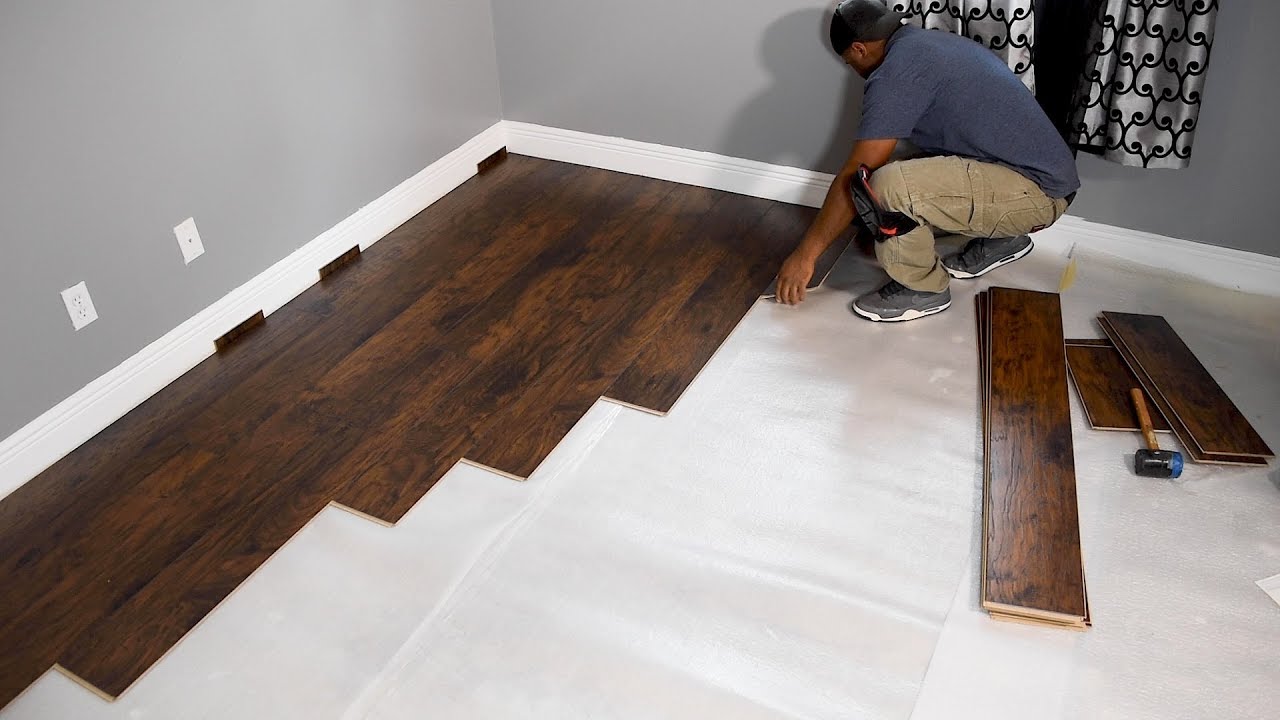
Over the Philadelphia metropolitan area -- the city of Philadelphia, Bucks County, Montgomery County, Delaware County, and South Jersey -- LVP installation typically runs cheaper for each square foot than hardwood. It is also lighter and cuts quicker, and the floating method of installation that LVP employs takes less longer than nail-down wood. If cost is a primary concern and you want top-quality results, LVP is where most affordable flooring installers in Philadelphia will guide you.
5. Nail-Down Hardwood Requires the Correct Subfloor
Solid hardwood installed using the nail-down process requires a wood subfloor that is thick enough -usually 3/4 inch plywood minimum. A lot of Philadelphia homes, especially those with concrete slab areas or older diagonal boards have to be repaired or upgrades before nail-down installation is a possibility. The failure to do this can lead to problems within the first year. The licensed flooring installers will indicate this in advance; budget contractors frequently don't.
6. LVP is the practical winner of Bathrooms and Kitchens
Bathroom tile installation continues to be popular and is a popular choice, however LVP has gained a large part of the kitchen and floor tiles market within Philadelphia because it's waterproof, warmer underfoot than ceramic tiles and quicker to put in. For homeowners looking for an authentic wood look throughout their home including wet areas LVP is a great choice for visual consistency. hardwood can't -- You're not using solid hardwood in the bathroom.
7. Custom Staining is a Hardwood-Only Advantage
One thing LVP does not provide is custom staining. For those who want a floor shade that's right for your cabinetry, trim or a specific style- a cool grey wash for example, a dark espresso, an inviting provincial tonehardwood offers that flexible control. Flooring professionals in Philadelphia with a custom staining service can make a truly unique floor. LVP comes in set colorways. What you see inside LVP's box are what's inside. will receive.
8. Engineered Hardwood Places itself squarely in Middle
This is important because a lot homeowners ignore it: engineered hardwood is a real wood surface that has better dimensional stability than solid hardwood. It's the best middle path one that's more resistant to moisture than solid but also more refinishable LVP and is also able to be installed as floating flooring in places when nail-down installation isn't feasible. Numerous flooring companies across Bucks and Montgomery County are recommending it currently for an excellent reasons.
9. Finding a Free Flooring Estimate Will allow you to evaluate both choices
Flooring companies that are reputable in Philadelphia will offer you both products side-byside if asked. This is by far the most useful thing you can consider before making a final decision. The variance in final costs comprising labor and materials usually astonishes homeownersoften it's greater than expected, sometimes it's substantial. In either case, you're making an informed choice instead of taking a guess.
10. The most effective floor is the one that is matched to your specific Home
There is no one universal winner. A 1920s rowhome in South Philly with an uneven subfloor with no central air is quite different from a 2005 colonial in Delaware County with a slab basement. The flooring installers who will take the their time walking around your property examine your subfloor, inquire about your family -- pets, kids and traffic patterns and then recommend a flooring will be the ones you want to work with. They who promote one product regardless of your needs are the ones to walk away from. Check out the top
waterproof flooring installation Philadelphia for website advice including licensed flooring installers Philadelphia, hardwood floor resurfacing Philadelphia, vinyl plank flooring Philadelphia PA, laminate flooring installation Philadelphia, engineered hardwood installation Philadelphia, luxury vinyl plank installation Philadelphia, cheap flooring installation Philadelphia, kitchen tile flooring Philadelphia, LVP flooring contractors Philadelphia, hardwood floor refinishing cost Philadelphia and more.
/GettyImages-471038610-5c68585546e0fb0001917173.jpg)
Hardwood Refinishing Vs. Replacement: What's The Right Decision?
Wood floors found in Philadelphia homes hold a lot of history in the wood -- hardwood flooring made of oak in a Germantown twin wide pine planks inside the Chestnut Hill colonial-style home, as well as decades-old hardwood on the Delaware County ranch that's seen three families. When flooring starts to appear rough, the first thought is typically for them to be replaced. However, it's not always the best option, and refinishing may not be the most cost-effective option even though it seems like it is on the surface. The choice between sanding and finishing the wood or taking the floor and refinishing it depends on a variety of factors that be apparent when someone who understands what they're looking at really examines the floor. Here's how to consider it before you decide to take either way.
1. The Floor Thickness Is the Primary thing that determines your options.
Solid hardwood can be sanded renewed several times during its lifespan -- however, not forever. Each refinishing process removes a small amount of wood and when the floor is removed close to the tongue-andgroove fastening device beneath, it can't be sanded to be resanded again in a secure manner. Most solid wood starts at 3/4 inch with 1/4 inch of wood above the tongue that is available for sanding. A flooring professional can assess the remaining thickness with an indicator placed in a non-detectable location -- the reading, over all other measurements, decides the status of refinishing in the works.
2. Engineered Hardwood It has a narrower, more refined refinishing Window
The installation of engineered hardwood has increased exponentially across Philadelphia, Bucks County, and Montgomery County homes over the over the past two decades. some homeowners don't even know the flooring is engineered until the need to refinish comes up. The wood veneer layer on engineered hardwood is much thinner than solid wood -- ranging between 1mm-6mm, depending on the kind of product this limits the number of times they can be smoothed. The engineered wood with thin veneers may only be able to handle one finishing pass or not whatsoever. Knowing what you've got before considering refinishing a wood piece is the best way to avoid the time and effort of a visit to estimate.
3. Refinishing costs significantly less than Replacement in the majority of cases.
Refinishing and sanding floors in Philadelphia typically costs from $3 to $ 6 per square foot. Flooring replacement for hardwood in full -- removal of existing flooring, subfloor assessment, new flooring, and installation -- will cost you between $10 and $20 per square foot or greater based on the type of wood as well as the method. For a 500-square foot space, that's a difference of a $1500 to $3000 project and a $5,000-$10,000 one. If the floor you have is sufficient thickness and there are no structural issues, refinishing provides some of the aesthetic impact of brand new floors for much less cost.
4. Surface Damage on its Own Is Nothing to be considered a reason to replace
Scratches and scuffs, dullness small stainings, superficial discoloration are exactly the things floor sanding is designed to solve. They look more blemishes than they really are. A proper sanding session removes the damaged surface layer entirely and reverts the floor to bare wood, at which point custom staining and finishing bring back its original appearance. Philadelphia homeowners who have to replace floors with damaged surfaces that they could have refinished away are making costly decisions based on aesthetics rather than real-world reality.
5. Structural damage alters the calculation Entirely
Warping, cupping, or significant damages to the floor that have penetrated below the surface and has caused rot to the board the level or flooring that have large gaps or missing sections differ from the wear and tear on the surface. Refinishing helps with surface wear -but it can't fix a board that has moved by way of moisture nor can it fix floors in which the subfloor underneath has failed. If structural damage is evident, the honest assessment from an approved flooring installer may be that replacing the floor is the only way to get ensure that the floor performs properly, rather than simply look better temporarily.
6. Previous Refinishing History can influence the current decision
A floor made of hardwood that's been refinished or more times during the span of its life could have little material left above the tongue no matter the thickness that it started. For instance, the original wood floor in the interior of a Philadelphia home that has never been completed -- which is quite common in older houses may be of substantial thickness even if it appears rough. The look of the floor is not a reliable indicator of its possibility of refinishing. A physical measurement and, sometimes by pulling the vents of a floor in order to view a cross-sectional section is the only way for a professional to know the remaining floor.
7. Custom staining during Refinishing will change the character of a floor
One of the advantages of refinishing that's not often recognized is the chance to alter colour of the floor. Custom hardwood staining in Philadelphia is part of the procedure of refinishing. Once the floor is sanded back to bare wood, a stain will be applied prior to the finishing coats are lowered. Owners of homes who have lived on the orange-toned wood of the 1990s for a while are often shocked to learn that the same hardwood can be transformed into cool grey, a rich walnut, or a warm natural based on the species, and also the stain choices. Removing the boards is not required to alter the appearance drastically.
8. It is difficult to match new Hardwood to existing flooring is Harder than it sounds
One scenario that pushes homeowners towards full replacement is if just a little bit of flooring must be repaired -- damaged by water, or in additional room, or a room that was carpeted previously. The installation of new hardwood that matches existing wood flooring in the remainder of the house is extremely difficult. The wood species, the cut patterns, grain patterns and decades of patina aren't replicated exactly with new materials. Flooring contractors in Delaware County and South Jersey who are honest about this will tell you that a total renovation of the whole floor area after patching is generally the best way to ensure the same visual consistency.
9. Replacement Opens the Door to upgrading the material totally
Sometimes, the best option is replacing the floor, not due to the fact that refinishing cannot be done but because the existing floor isn't worth keeping. Low-quality softwood that can scratch easily flooring, floors with extensive subfloor concerns that need to be addressed in the first place, or houses where the layout is changing and the present floor isn't suitable anymore this is an instance that can be transformed by a complete upgrade. switching from worn softwood white oak hardwood or from damaged natural hardwood to engineered better suited to the home's moisture conditions, is a different decision from replacing a laminated floor without a reason.
10. Review the Assessment before You Take a decision, not once You've Select
The refinish in comparison to. replace decision must be taken after a professional has looked at the floor, not prior to. Many reputable flooring contractors in Philadelphia offer free estimates that include this kind of evaluation -- measuring the thickness of floors, identifying of structural as opposed to. surface damage, a moisture assessment, along with a clear explanation of what each path involves in terms of cost, timeline, and outcome. For homeowners who only call for a replacement price may have already talked themselves out of the possibility of refinishing they've yet to fully explore. The evaluation is completely free. If the replacement comes out to be ineffective will not be. Have a look at the top View the top rated hardwood floor installation South Jersey for blog info including flooring contractors Philadelphia PA, hardwood flooring Montgomery County, flooring installers Philadelphia, LVP flooring Philadelphia PA, floor installation Delaware County PA, licensed flooring installers Philadelphia, flooring contractors Bucks County, hardwood floor refinishing cost Philadelphia, nail down hardwood flooring Philadelphia, flooring installers Philadelphia and more.